

Add Row
Add Element
Logo for a showcase news media site, representing quality journalism.
update
Denver Showcase News
update
Add Element
  • Home
  • Categories
    • Home Improvement
    • Arts & Culture
    • Local News
    • Health & Wellness
    • Family Living
    • Professional Advice
    • Technology & Innovation
    • Business
    • Sports
  • Featured Local Businesses
  • Business Profiles
October 20.2025
2 Minutes Read

Bank Closures in Denver: What UMB's Acquisition Means for Residents

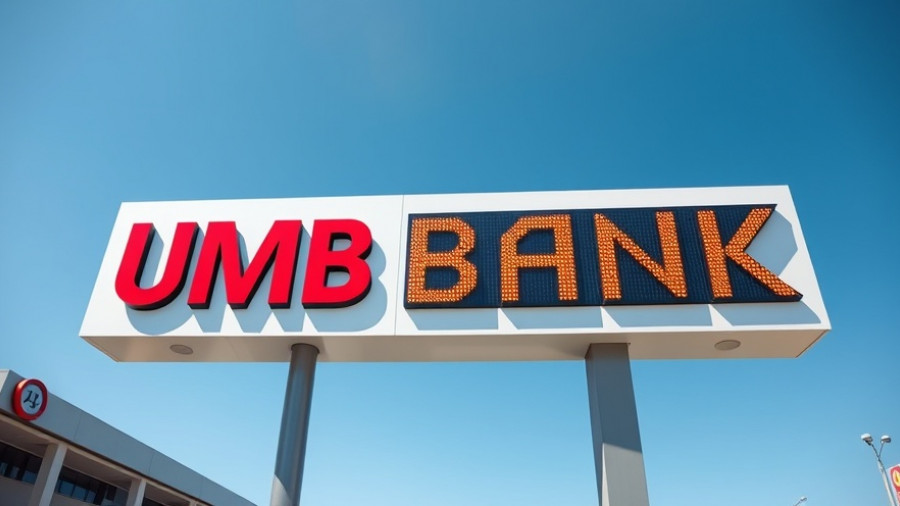
UMB Bank sign with digital display in Denver, clear sky.

Movements in Denver's Banking Landscape

As the banking environment in Denver evolves, the recent closure of three Citywide branches marks a significant change following UMB Bank's acquisition of Heartland Financial. According to UMB CEO Mariner Kemper, the acquisition, completed in January for $2 billion, effectively doubled UMB's branch presence across Colorado and thrust the institution into a competitive position as one of the top five banks in the Denver area. This strategic alignment reflects a growing trend in the banking sector toward consolidation to increase market share and efficiency.

Impact on Local Communities

The closure of the branches at 55 Madison St. in Cherry Creek, 1800 Larimer St. in LoDo, and 6500 E. Hampden Ave. in the Hampden neighborhood undoubtedly raises concerns among customers and local residents. With over 25 UMB branches remaining in the state, UMB assures customers that alternative locations are accessible within a mile. However, the disappearance of Citywide’s physical presence calls for a more profound reflection on how these shifts influence community engagement and customer service.

New Opportunities on the Horizon

While some may mourn the loss of familiar banking locales, it opens avenues for UMB to innovate and establish a fresh branch in the Bonnie Brae neighborhood within the next two years. This development highlights UMB's inclination not only to expand but to enhance its offerings, including mortgage assistance programs and other services that can better serve families and first-time homebuyers.

Financial Growth and Sector Dynamics

With the HTLF acquisition, UMB's share of the Denver metropolitan deposits has surged from 2.1% to 4.2%, according to the Federal Deposit Insurance Corporation (FDIC). Such a leap not only elevates the bank’s position but also signals increasing competition in financial services, compelling other institutions in the area to reassess their strategies. As UMB continues to branch out, it instigates a market response that may push smaller banks to find their unique value propositions.

Importance of Adaptation in Banking

This acquisition and the subsequent branch closures exemplify a broader trend where banking institutions merge to remain viable in an increasingly digital and competitive landscape. Traditional banks are pressured to adapt by streamlining their operations and enhancing digital offerings, a shift underscored by UMB's deal to become the official bank of the Denver Nuggets. This partnership signals not just investment in the community but a marketing strategy to unite sports enthusiasm with banking services.

Conclusion and Looking Ahead

While UMB Bank’s acquisition of Heartland Financial has led to the closure of Citywide branches, it offers a glimpse into the future of banking in Denver. Residents are encouraged to stay informed about upcoming branch openings and new services that could enhance financial accessibility. The industry is evolving, and adapting to these changes can lead to new opportunities for both banks and the communities they serve.

Business

3 Views

0 Comments

Write A Comment

*
*
Related Posts All Posts
12.15.2025

Prepare Now: Critical Fire Weather and Potential Colorado Power Outages

Update Critical Wildfire Weather Sets the Scene With weather forecasts predicting strong winds and critical fire conditions, Colorado residents are on alert for potential power outages. Xcel Energy announced that it may implement Public Safety Power Shutoffs (PSPS) to minimize wildfire risks in communities over the Front Range. The utility emphasizes that power may be proactively cut off in certain areas where the conditions indicate a high likelihood of wildfire ignition. Understanding Public Safety Power Shutoffs The PSPS is not a decision Xcel takes lightly. It involves turning off power to specific regions based on a combination of factors, including wind speeds, humidity levels, and existing environmental conditions. These shutoffs are part of Xcel’s strategy to prevent catastrophic fires, such as the tragic Marshall Fire of 2021, which destroyed over 1,000 homes, partly due to power line issues during high winds. Preparing for Possible Outages As the community braces for possible outages, it’s vital for families to prepare adequately. This includes gathering essential supplies—like flashlights, batteries, and non-perishable food. Consider setting your refrigerator to a colder temperature to extend food preservation during outages. Furthermore, Xcel Energy advises updating contact information for outage alerts to stay informed during critical weather events. The Importance of Communication Xcel Energy emphasizes that they will reach out to customers ahead of any planned shutoffs. Residents should also follow updates from local officials and contribute to community preparedness by engaging with neighbors, especially those who may be more vulnerable in emergencies. Impact on Daily Life The forecasted winds, which could reach up to 40 mph, create not just a potential disruption in power but also exacerbates fire risks. Alertness to these conditions is critical, as Floridians are often confronted with the consequences of power systems strained by extreme weather. In closing, proactive steps like preparing emergency kits and remaining informed can significantly mitigate the impacts of power outages should they occur. Don't wait until the wind howls; take action now for the safety of your family and community.

12.14.2025

The Lunch Bowl Era Declines: Why Families Are Choosing Sandwiches Over Bowls

Update The Decline of the Lunch Bowl: A Shift in Tastes As the concept of the "lunch bowl" fades into nostalgia, America’s dining landscape is shifting towards heartier, handheld options such as sandwiches and tacos. Chains like Chipotle, Sweetgreen, and Cava, once hailed as the epitome of fast-casual eating, are grappling with this transition as consumers yearn for greater variety and texture in their meals. Consumer Culture and the Rise of Handhelds Steve Ells, founder of Chipotle, originally sparked the lunch bowl trend back in 2003 when he introduced a bowl option to cater to customers who preferred to open their burritos and eat with a fork. However, that era is quickly waning. A growing number of diners, like 28-year-old New Yorker Alejandro Paczka, complain about the monotony of the so-called "slop bowls," opting instead for cheaper and more satisfying sandwiches. “I go to the office, and I eat slop,” Paczka noted, reflecting a widespread sentiment that such meals feel demeaning. Market Impact: Stock and Sales Metrics The industry is experiencing significant turmoil; combined, Chipotle, Sweetgreen, and Cava have suffered a staggering $48 billion loss in market value this year. Chipotle has reported a projected revenue drop, which would mark its second annual decline since going public nearly 20 years ago, only previously occurring during the E. coli outbreak in 2016. Future Potential and Innovative Strategies Despite this downturn, experts warn against writing off these chains too soon. Michael Kaufman of Harvard Business School reminds investors that these brands thrived on their commitment to quality, suggesting they refocus marketing on their strengths. Chipotle's CEO Scott Boatwright emphasized that their strategy remains fixated on offering fresh food with high-quality ingredients, signaling confidence in their brand. New Trends in Fast Casual: Embracing Change In response to shifting consumer preferences, chains are adjusting their menus. Sweetgreen plans to test handheld items early next year, demonstrating a notable pivot. Meanwhile, Chipotle seeks to enhance dining experiences by refining its locations and introducing limited-time menu items to reignite interest. Innovative offerings could include sandwiches that feature creative flavor combinations, potentially attracting previous fans back to their outlets. The Broader Context: Fast Casual's Challenge The fast-casual segment’s struggles are compounded by aggressive pricing strategies from traditional fast-food chains that entice cost-conscious diners. For example, McDonald’s is launching combo meals at significantly reduced prices to capture market share. In tackling this challenge, Chipotle and similar brands will need to effectively communicate their unique value proposition to an audience increasingly wary of price tags that exceed $10. As consumer preferences evolve, staying attuned to these shifts will be crucial for fast-casual restaurants aiming to thrive in this new dining era. The era of the lunch bowl may be ending, but opportunity abounds for those willing to adapt.

12.13.2025

Denver CEO's Acquisition of Freebird, TPC, and Jane.com: What This Means for Local Families

Update Denver CEO Jonathan Czaja Makes Bold Moves with Local Brands In an unexpected twist, Jonathan Czaja, recently stepping down from his role as the CEO of three companies, has made headlines by acquiring notable local brands—used bike seller The Pro’s Closet, boot retailer Freebird, and women’s fashion website Jane.com. This acquisition, coming just three months after his departure, reflects a significant shift in the business landscape as Czaja seeks to rejuvenate these brands after turbulent times. Revitalizing The Pro's Closet: A Cycling Culture Icon The Pro’s Closet, once shuttered, has successfully revived under Czaja’s leadership. Having undergone near closure after substantial investments during the pandemic, TPC now aims for a fresh start. The company has recorded impressive sales of $12 million so far this year, with expectations to double that figure by 2026. Chief Operating Officer JP Gage highlights the brand’s commitment to sustainable growth, aiming to balance a reduced budget while maximizing profitability. Freebird Boots: A New Chapter Freebird has also witnessed a rejuvenation, reopening and expanding its retail presence with a new store at Park Meadows mall, adding to its locations in Nashville and Charleston. Czaja’s strategic decisions, including bringing back the original design team, signal a robust revival. Customers can expect innovative new products as the brand seeks to reestablish itself in a competitive marketplace. Strategic Brand Synergy: A Common Thread The variety among these brands—bikes, boots, and fashion—underscores a shared ethos of strong customer loyalty and community engagement, which Czaja aims to cultivate further. “While bikes and boots are very different, they share similar audiences that appreciate quality and innovative offerings,” he observes. This strategic acquisition is not just about ownership but about thinking innovatively to foster brand synergy. Financial Footings and Future Growth Expectations While Czaja is committed to overcoming past financial challenges, his focus remains on sustainable growth without compromising quality. By reconsidering cost structures that bloated during COVID-19, Czaja’s “lean and scrappy” mantra aims to position these local brands for resilience. The unique combination of revitalization strategies, such as the introduction of consignment opportunities in TPC, illustrates a tactical approach looking toward the future. The Value of Local Brands in Community This acquisition goes beyond business metrics; it signifies a personal connection and dedication to community building. As Czaja leads these brands forward, he fosters not just commercial strength but also local pride. For parents and families, the prospect of supporting durable local businesses transcends mere transactions—it heralds a commitment to quality goods that resonate with a shared culture. In conclusion, as Czaja steps forward with these acquisitions, he emphasizes the importance of maintaining a balance between history and innovation. These local brands represent not only a glimpse into Colorado's entrepreneurial spirit but also a bright outlook for community-based businesses. Parents and families, marking a new chapter in local shopping experiences, will likely find renewed excitement in the products that echo a commitment to quality, sustainability, and local engagement.

Terms of Service

Privacy Policy

Core Modal Title

Sorry, no results found

You Might Find These Articles Interesting

T
Please Check Your Email
We Will Be Following Up Shortly
*
*
*